
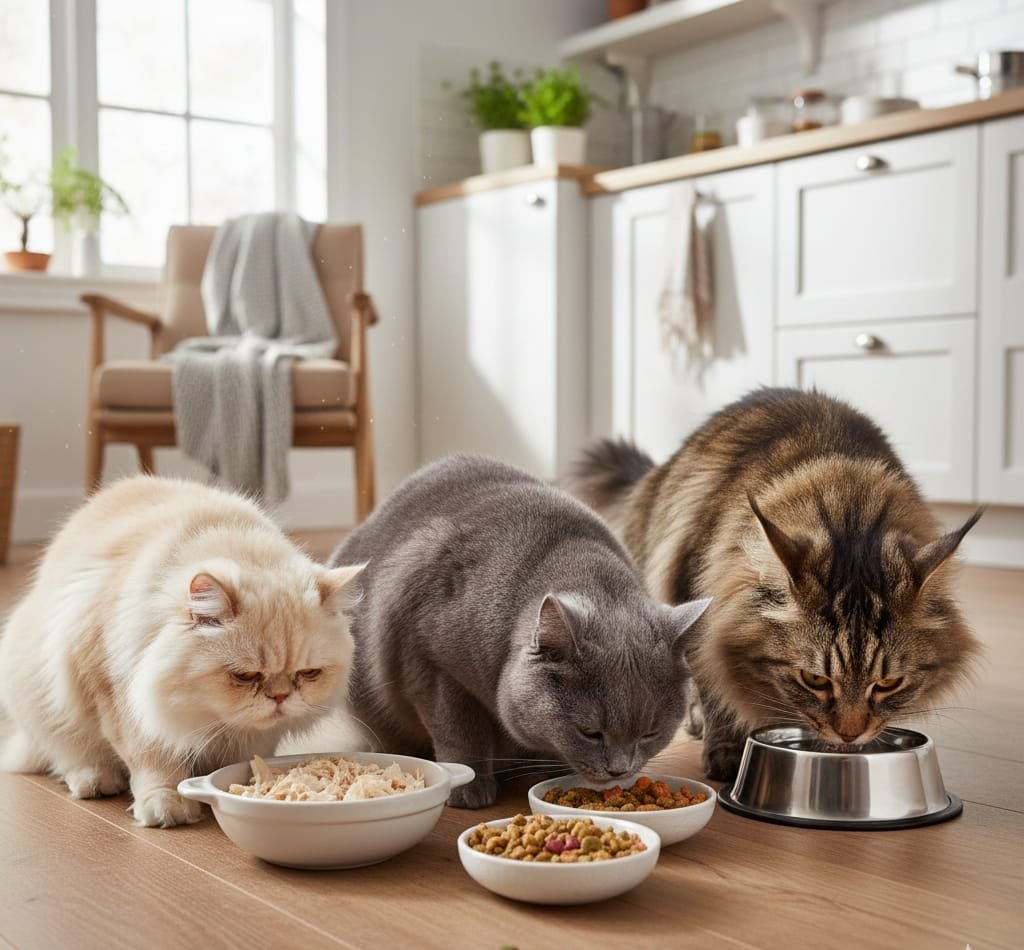
Healthy Nutrition Pet Diet For Cats
A healthy nutrition diet for cats ensures they get the right balance of protein, fats, vitamins, and moisture to stay active and disease-free. Since cats are obligate carnivores, their bodies thrive on animal-based proteins that support strong muscles, sharp vision, and overall vitality. Including high-quality wet or dry food, fresh clean water.
1. Rich Animal Protein
Cats need protein from real meat like chicken, turkey, or fish. It fuels their energy, supports muscle health, and maintains lean body structure.
2. Essential Fatty Acids
Omega-3 and Omega-6 fats keep your cat’s skin healthy, coat shiny, and support proper brain and eye development.
3. Proper Hydration
Cats naturally drink less water, so including wet food in their diet helps prevent dehydration and supports kidney and urinary health.
4. Balanced Vitamins & Minerals
A complete cat diet must include taurine, calcium, and vitamins A, D, and B-complex for heart health, strong bones, and good vision.
5. Controlled Portions
Serving the right portion prevents obesity and keeps digestion smooth. Follow vet-recommended feeding guidelines based on age and weight.
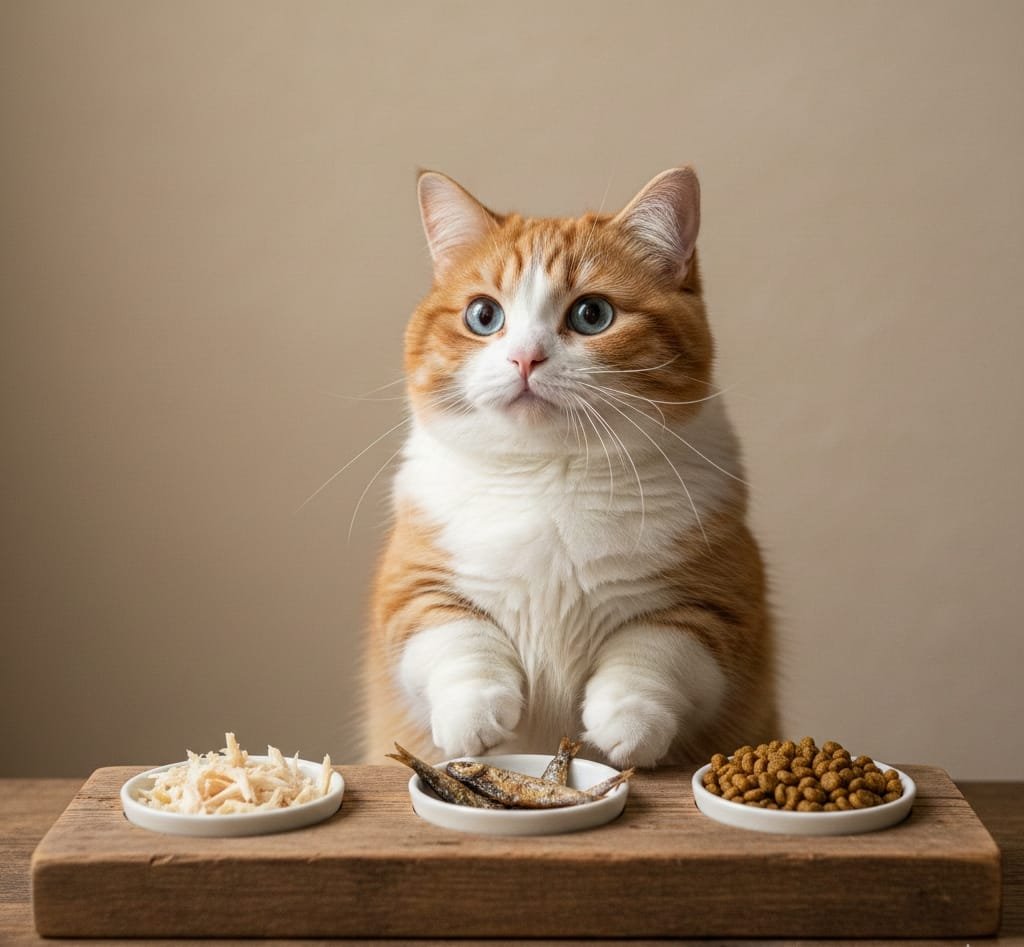
Best Daily Food Options For Cats Diet
Choosing the best daily food options for a cat’s diet is essential for maintaining good health, energy, and longevity. A well-balanced cats diet should include high-quality protein, healthy fats, and essential vitamins to support muscle strength, digestion, and a shiny coat. Daily meals made with nutritious ingredients help cats stay active, manage weight, and strengthen their immune system.
Chicken-Based Food
Provides high-quality protein to support strong muscles, maintain energy, and keep cats active.
Fish-Based Food
Rich in omega-3 fatty acids, promoting healthy skin and a shiny, soft coat.
Wet Cat Food
High moisture content improves hydration and supports urinary tract health.
Dry Cat Food
Convenient for daily feeding and helps reduce plaque buildup, supporting dental health.
Boiled Eggs (Occasional Treat)
A good source of protein and essential amino acids, aiding growth and overall strength.
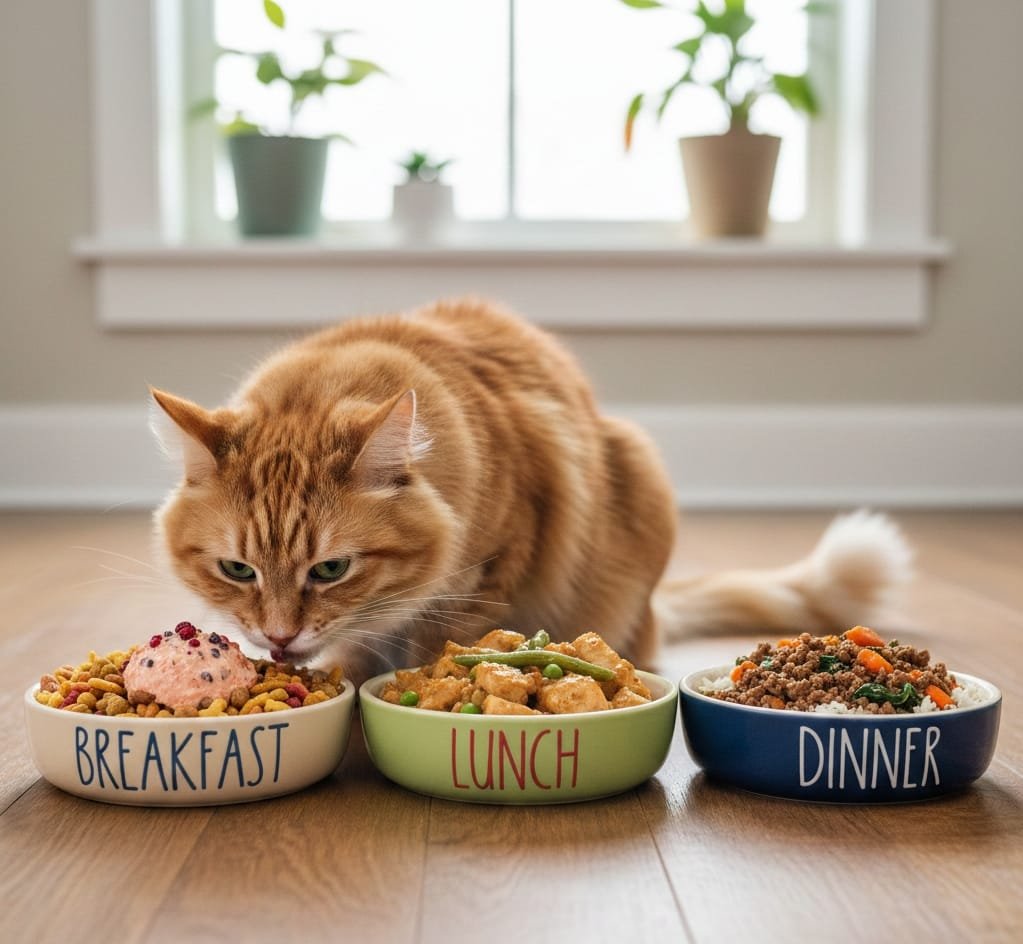
Perfect Feeding Schedule For Your Cats
A steady feeding routine keeps your cat healthy, prevents overeating, and supports smooth digestion. Cats feel more relaxed and active when their meal timings stay consistent.
Morning Meal (Breakfast)
Give a balanced, protein-rich meal to start their day with energy. It helps maintain a healthy metabolism and prevents early morning hunger.Midday Light Snack
Offer a small, healthy snack like boiled chicken or a spoon of wet food. This keeps their energy steady and avoids overeating later.Evening Meal (Dinner)
Serve a complete and satisfying meal that keeps your cat full throughout the night. It supports better sleep and reduces nighttime begging.Fresh Water All Day
Keep clean water available at all times. Hydration supports kidney health, digestion, and overall wellness, especially for cats on dry food.Avoid Free-Feeding
Not leaving food out all day prevents weight gain and unhealthy habits. Scheduled feeding helps you monitor their appetite and maintain a healthy weight.
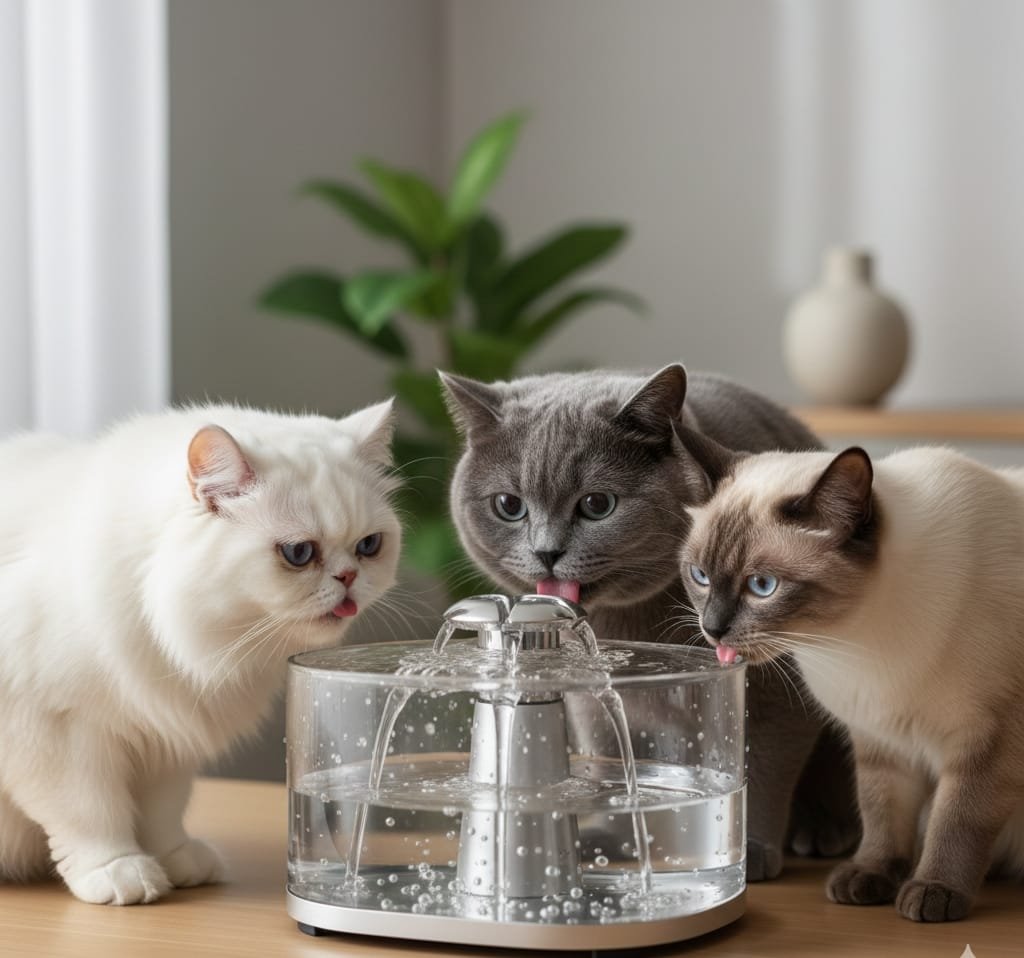
Pure Hydration For Everyday Cats Wellness
Proper hydration is a cornerstone of everyday wellness for cats. Water supports digestion, kidney function, and overall metabolism, helping cats stay healthy, active, and energetic. Many cats do not drink enough water on their own, so incorporating high-moisture foods and providing fresh water daily is essential. Hydration also helps maintain healthy skin and a shiny coat while reducing the risk of urinary tract issues and kidney problems.
Fresh Water Availability
Always provide clean, fresh water to encourage consistent drinking habits and support overall bodily functions.Hydration-Boosting Treats
Offer treats like low-sodium broths or water-rich foods to supplement fluid intake.Water Fountains
Cats often prefer running water; water fountains can encourage them to drink more regularly.Monitor Hydration Levels
Check skin elasticity and urine output to ensure your cat remains properly hydrated.Avoid Dehydrating Foods
Limit excessive dry kibble or salty foods that may reduce hydration and strain kidney.
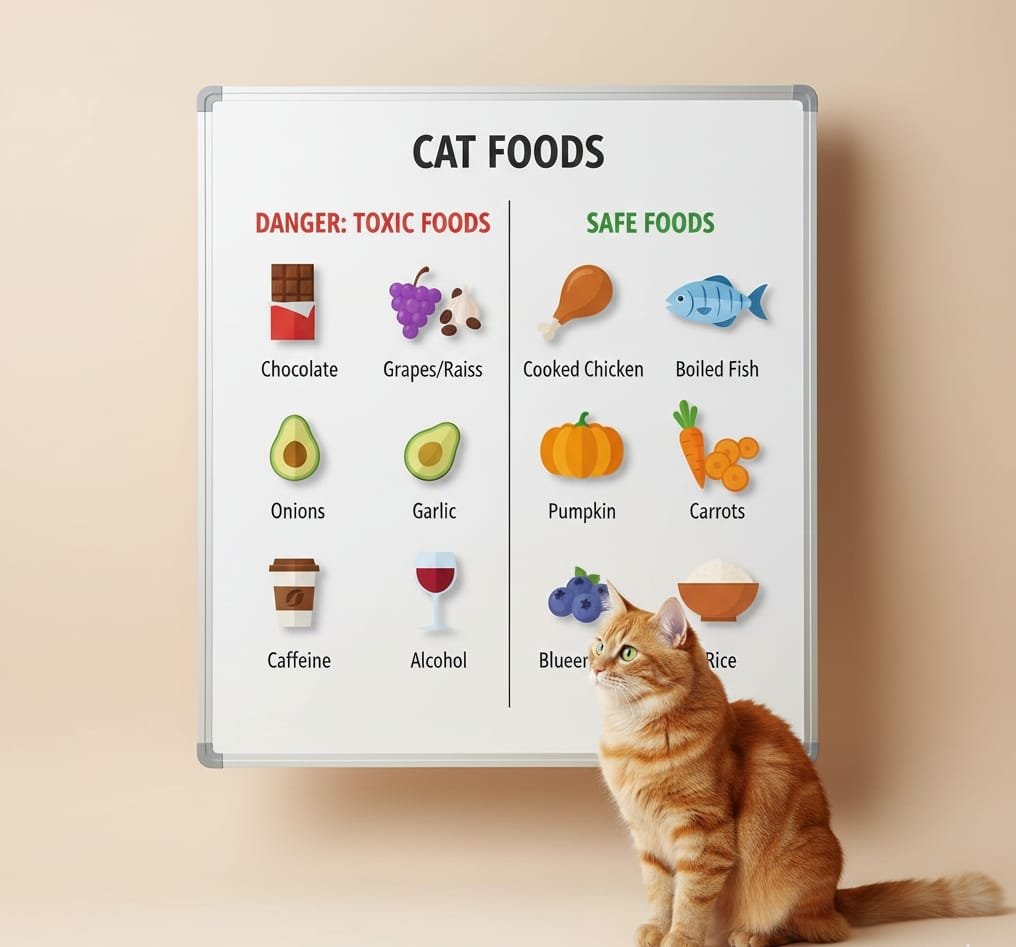
Toxic Foods Every Cat Owner Should Know
Some everyday foods that seem harmless to us can be extremely dangerous for cats. Knowing which foods to avoid is essential for keeping your cat safe, healthy, and free from digestive problems or serious poisoning.
Chocolate
Contains theobromine and caffeine, which can cause vomiting, seizures, and dangerous heart issues in cats.Onions & Garlic
These can damage red blood cells, leading to anemia and weakness even in small amounts.Grapes & Raisins
Highly toxic to cats and can cause sudden kidney failure, even if eaten in tiny quantities.Alcohol
Even a small sip can depress the nervous system, cause vomiting, and lead to severe poisoning.Caffeine (Tea, Coffee, Energy Drinks)
Affects the heart and nervous system, causing restlessness, rapid breathing, and tremors.Raw Dough (Yeast Dough)
Expands in the stomach and produces alcohol, causing bloating, pain, and serious .