
How to Help a Dog Eat Again: Natural Appetite Boosting Tips for Sick or Picky Dogs
When a dog refuses food, it can be stressful for any pet owner. Learning how to help a dog eat again is essential for maintaining their health, energy, and overall well-being. A balanced pet diet ensures that sick or picky dogs get the right nutrients even during illness or stressful periods. By offering natural strategies like soft proteins, warm meals, and a calm feeding environment, you can stimulate your dog’s appetite and encourage them to eat again naturally.
Why Dogs Lose Appetite
Sometimes dogs refuse their food and this can be normal, but if it is happening continuously then it is a sign of a problem. Losing appetite in dogs can be due to many reasons: illness, digestive problems, dental pain, stress, or changes in routine. If the dog’s pet diet suddenly changes or the environment is stressful then also it may not eat. Low activity or boredom also reduces appetite. If you understand the reason then you can give them the right pet diet and feeding routine which will help in bringing back their appetite and they can eat naturally again.
Natural Ways to Boost Dog Appetite
If your dog is sick or picky and won’t eat, there are some simple and natural ways you can stimulate their appetite. These tips will help them eat naturally again and keep their pet’s diet balanced.
Warm the food: Slightly warming meals enhances aroma and makes the food more appealing for your dog.
Soft proteins: Boiled chicken, turkey, or fish are easy to digest and ideal for sick or picky dogs.
Small frequent meals: Instead of one large portion, offer 3–4 small servings throughout the day.
Calm feeding environment: Reduce noise and stress by feeding your dog in a quiet and comfortable area.
Light exercise before meals: A short walk or gentle playtime before feeding can naturally stimulate your dog’s appetite.
Add nutritious toppings: Mix a little pumpkin, rice, or bone broth with the meal to make it more tempting and nutritious.
- Following these simple strategies can help your dog eat again naturally and maintain a healthy pet diet.
What to Feed a Sick Dog with No Appetite
Feeding a sick dog who refuses food can be challenging, but choosing the right meals is essential to help them regain strength and stay healthy. Knowing what to feed a sick dog with no appetite ensures your dog receives proper nutrients while recovering and supports a balanced pet diet.
Soft proteins: Boiled chicken, turkey, or fish are gentle on the stomach and easy to digest.
Comforting carbohydrates: Rice, pumpkin, or sweet potatoes provide energy and support digestion.
Hydration: Bone broth or low-sodium chicken broth keeps your dog hydrated and encourages eating.
Small, frequent meals: Offer 3–4 small servings instead of one large portion to help stimulate appetite.
Appealing aromas: Slightly warming the food can make it more enticing for picky or sick dogs.
Best Foods for Sick or Picky Dogs
Feeding the right foods is essential when your dog is sick or refuses to eat. A proper pet diet not only encourages your dog to eat again naturally but also supports their recovery, energy, and overall health. Choosing meals that are easy to digest, nutrient-rich, and appealing will make mealtime stress-free for both you and your dog.
Boiled chicken: Lean, high in protein, and easy on the stomach, perfect for sick or picky dogs.
Cooked rice: A gentle carbohydrate source that provides energy and aids digestion.
Pumpkin or sweet potato: Supports digestive health and adds essential vitamins and fiber.
Bone broth: Hydrating and flavorful, helps entice dogs to eat while boosting nutrients.
Soft, homemade dog food: Allows you to customize ingredients for a balanced pet diet tailored to your dog’s needs.
Lean fish or turkey: Easy to chew and digest, providing high-quality protein to support recovery.
Mashed vegetables: Lightly cooked carrots or peas add texture, vitamins, and extra taste.
Appetite-Boosting Tips at Home
Small changes at home can make mealtime more inviting and help your dog regain their appetite naturally. These tips not only encourage your dog to eat again but also support a balanced pet diet, keeping them healthy and strong
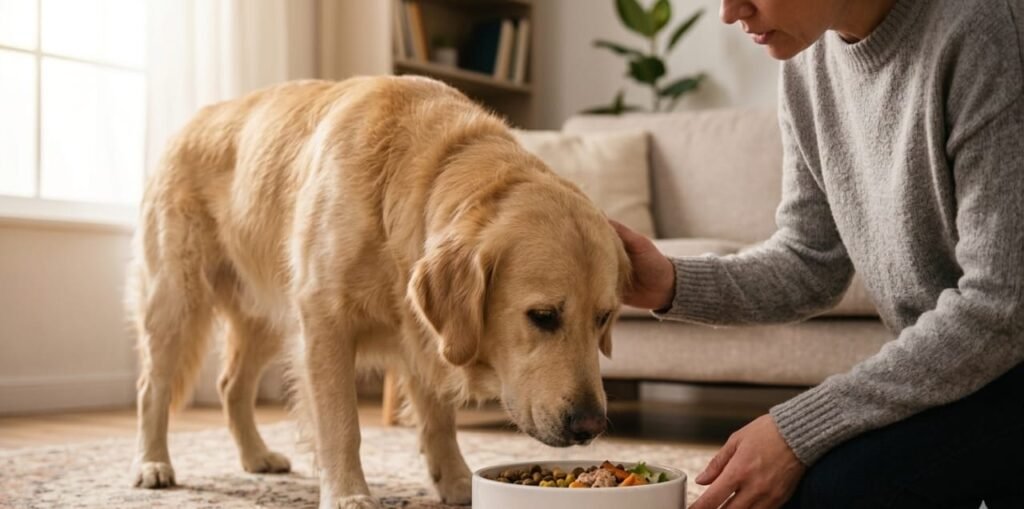
Clean, attractive bowls: Serving food in fresh, clean bowls makes meals more appealing and encourages a healthy pet diet.
Quiet feeding area: Reduce noise and distractions to give your dog a calm environment to eat.
Small, frequent meals: Offer 3–4 small portions throughout the day to help stimulate appetite.
Add nutritious toppers: A little bone broth, pumpkin, or rice on top of meals can make food more enticing while keeping the diet balanced.
Gentle encouragement: Sit near your dog or talk softly during feeding to create a positive and comforting experience.
Light exercise before meals: A short walk or playtime can naturally boost appetite and interest in food.
Consistent routine: Feed at the same times every day so your dog knows when to expect meals and maintains a healthy eating pattern.
By following these home strategies, you can help your dog eat again naturally, strengthen their health, and ensure their pet diet is complete and balanced for faster recovery.
Signs You Should See a Vet
Sometimes, loss of appetite or picky eating can signal a serious health issue. While home remedies and natural tips help most dogs, it’s important to recognize when professional care is needed to protect your dog’s health and maintain a balanced pet diet.
Refusal to eat for more than 24–48 hours: A persistent lack of appetite can be a sign of illness and should not be ignored.
Lethargy or weakness: If your dog seems unusually tired, weak, or less active than normal, it may indicate a health problem.
Vomiting or diarrhea: Frequent vomiting or loose stools can signal digestive issues that may need medical attention.
Rapid weight loss: Sudden or noticeable weight loss is a serious warning sign and should be checked by a veterinarian.
Changes in behavior: Hiding, excessive panting, or unusual aggression can indicate discomfort, pain, or sickness.
If you notice any of these signs, consult your veterinarian promptly. Early intervention ensures your dog gets the right treatment and a proper pet diet plan to help them eat again naturally and recover faster.
FAQ – Dog Appetite / Sick Dog Care
How can I naturally boost my dog’s appetite?
To naturally boost your dog’s appetite, offer soft, easily digestible foods like boiled chicken, rice, or pumpkin. Serve small, frequent meals in a calm feeding area and gently encourage your dog. These steps support a balanced pet diet and help your dog eat again naturally.
Q2: What are the best foods for sick or picky dogs?
Sick or picky dogs do best with gentle, nutritious foods such as boiled chicken, rice, pumpkin, sweet potatoes, and bone broth. Homemade soft dog food is also effective in maintaining a healthy pet diet and encouraging your dog to eat.
Why is my dog refusing food even though it seems healthy?
Temporary loss of appetite can occur due to stress, minor digestive discomfort, or changes in routine. Offering appealing foods and following natural appetite-boosting tips can help your dog return to a normal eating pattern while supporting a proper pet diet.
How long can a sick dog safely go without eating?
Dogs can survive short periods without food, but refusal to eat for more than 24–48 hours can be dangerous. Maintaining a proper pet diet with small, soft meals helps prevent health issues and supports recovery.
When should I take my dog to a vet for appetite loss?
Consult a veterinarian if your dog refuses food for more than a day or two, shows lethargy, vomiting, diarrhea, rapid weight loss, or unusual behavior. Early intervention and a suitable pet diet can help your dog eat again naturally and recover faster.
Conclusion
Helping a sick or picky dog regain their appetite requires patience, care, and the right approach. By offering soft, easily digestible foods, small frequent meals, and maintaining a calm feeding environment, you can support a healthy pet diet and encourage your dog to eat again naturally. Monitoring their behavior and recognizing signs that require veterinary attention ensures timely intervention and faster recovery.
Remember, a balanced diet, gentle encouragement, and attentive care are key to keeping your dog healthy, happy, and active. Following these tips will not only improve their appetite but also strengthen your bond with your furry companion.